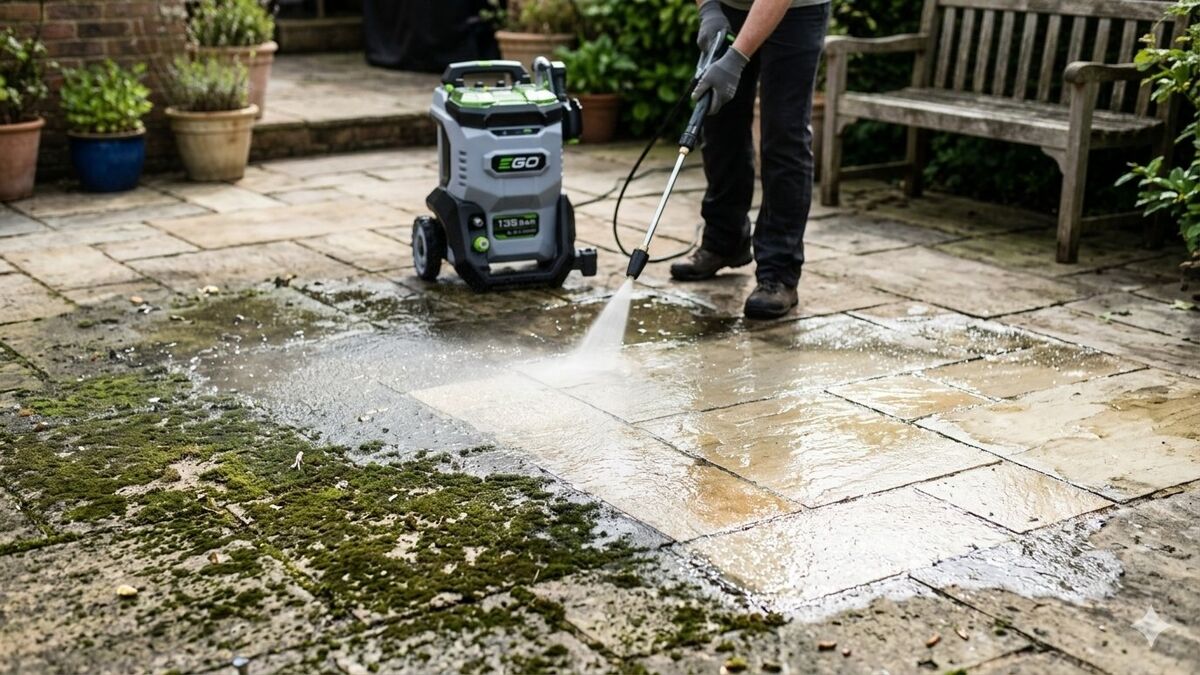
Algae, moss, black spots and general grime can build up on patio slabs over time, especially through autumn and winter. Left untreated, they make slabs slippery and leave your garden looking neglected.
So, how do you clean patio slabs properly? A pressure washer is the fastest option, but the right method depends on what you're dealing with. Some stains shift with soapy water. Others need a bit more work.
Quick answer: The best way to clean patio slabs
The best way to clean patio slabs is with a pressure washer. It shifts dirt, algae and moss in minutes, without the effort of scrubbing on your hands and knees.
For general grime and green algae, water pressure alone is usually enough. For stubborn black spots, which are often caused by lichen, apply a patio cleaner first and leave it for 15 to 20 minutes before rinsing.
Keep the nozzle moving and work in sections. Hold it at a slight angle rather than pointing straight down, and stay 20 to 30cm from the surface. Natural stone like sandstone can pit if you get too close.
How to clean patio slabs with a pressure washer
Nothing shifts patio grime faster than a pressure washer. Here's how to use one without damaging your slabs.
- Clear the patio and sweep away loose debris. If there's heavy moss or algae, scrape off the worst with a stiff brush first.
- Connect your pressure washer to a water source. Cordless models like the EGO HPW2000E can draw from a bucket, so you're not restricted to working near an outside tap.
- Use a 25° or 40° nozzle for general cleaning. Hold it 20 to 30cm from the surface, work in overlapping passes, and keep it moving. Pointing straight down or lingering in one spot can damage softer stone like sandstone.
- For ground-in dirt, switch to a turbo nozzle. It's more aggressive, so avoid using it on natural stone or near jointing sand.
- Rinse the patio towards a drain and let it dry fully before putting furniture back.
How to remove algae and moss from patio slabs
Algae and moss thrive in damp, shaded spots where water pools and air doesn't circulate. Porous stone like sandstone is especially prone to it.
A pressure washer will blast off surface growth quickly, but it won't kill the spores. For heavy infestations, apply a biocidal patio cleaner first and leave it for 15 to 30 minutes. This kills the algae at the root and slows regrowth for months.
For smaller patches, boiling water works surprisingly well. Pour it directly onto the moss, wait a few minutes, then scrub with a stiff brush and rinse.
Once the patio is clean and dry, we’d recommend applying a sealant. It creates a waterproof barrier that stops moisture soaking into the stone, which is exactly what algae needs to take hold again.
If your patio stays green no matter what you do, the problem is usually shade or drainage. Cutting back overhanging branches and improving airflow will make a bigger difference than cleaning more often.
Read next: How to clean paths and driveways with a cordless bristle brush
Does vinegar remove black spots on the patio?
Vinegar can fade black spots on patio slabs, but it won't remove them completely.
Black spots are usually lichen, a stubborn combination of fungi and algae that embeds deep into porous stone. Vinegar's acidity will kill some surface growth, but the roots survive and regrow within weeks.
If you want to try vinegar, mix equal parts white vinegar and water and leave it on the affected areas for 20 to 30 minutes before scrubbing. It works best on concrete or porcelain. Avoid natural stone like limestone or sandstone as vinegar can etch the surface and leave dull patches.
For established black spots, the most effective method is a dedicated black spot remover followed by a pressure washer. The cleaner penetrates the stone and kills lichen at the root. The pressure washer then blasts away the dead growth and any residue. Apply the cleaner in dry weather, leave for up to 24 hours, then rinse off with a pressure washer like the EGO HPW2000E.
Sealing your patio afterwards stops moisture soaking into the stone, which helps prevent black spots returning.
How to keep your patio clean for longer
In the UK climate, some algae and moss growth is almost inevitable. But the right habits will slow it down and make each clean easier than the last.
- Sweep regularly. Fallen leaves and debris trap moisture and feed algae. Clear them before they settle.
- Improve drainage. Standing water is the main reason patios turn green. If water pools after rain, address the slope or add drainage channels.
- Cut back overhanging branches. More sunlight and airflow means slabs dry faster, giving algae less chance to establish.
- Move furniture around. Chairs and planters create damp spots underneath. Shifting them occasionally lets the stone dry out properly.
- Apply a sealant after cleaning. It blocks moisture from soaking into porous stone like sandstone. Reapply every two to three years.
- Use a biocidal wash in autumn. Applying an algae inhibitor in September, before the wet season, protects slabs through winter and keeps them cleaner for spring.
A quick blast with the EGO pressure washer once or twice a year removes the biofilm layer that algae needs to take hold, even if the patio doesn't look dirty yet.
Get your patio looking like new
Dirty patio slabs don't have to stay that way. Whether you're dealing with general grime, green algae or stubborn black spots, the right method will shift it.
A pressure washer is the fastest way to get results. The EGO HPW2000E is cordless, portable, and powerful enough to handle most patio cleaning jobs without the hassle of trailing cables or petrol fumes. And because it can draw water from a bucket, you're not tied to working near an outside tap.
Give your patio an hour of attention and you'll have a garden you want to spend more time in.