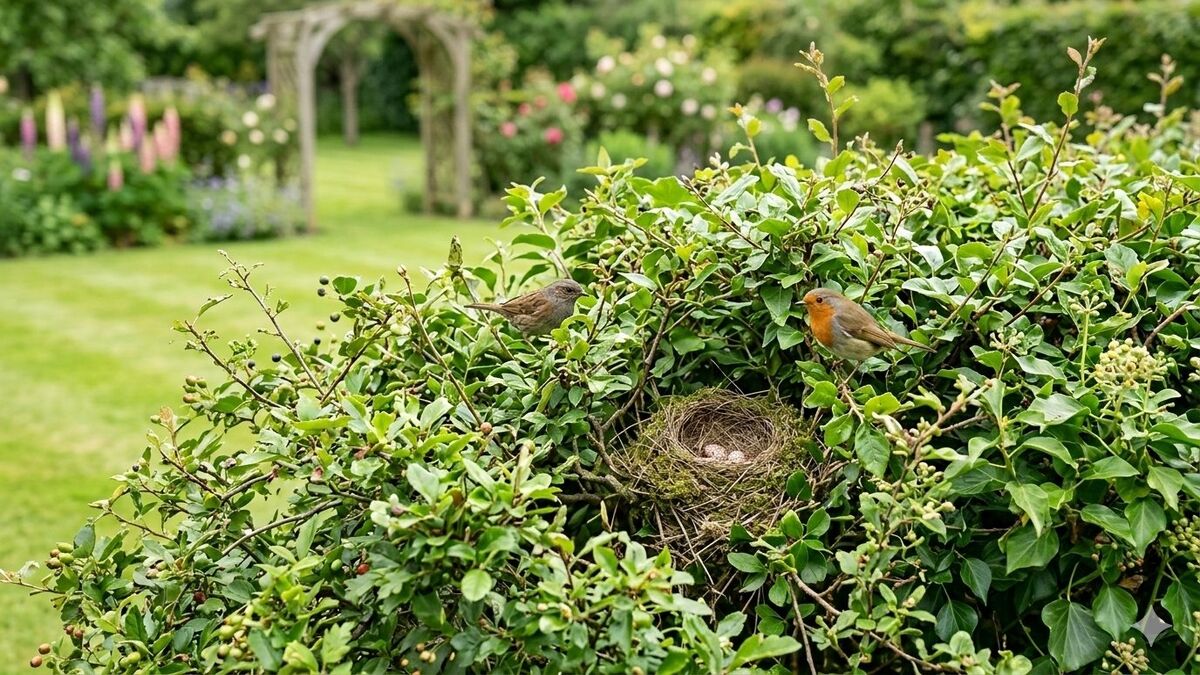
From March onwards, hedges across the UK become nesting sites for blackbirds, robins, sparrows and more. A badly timed trim could disturb eggs, chicks, or parent birds mid-brood - and that's an offence under the Wildlife and Countryside Act.
Get the timing wrong and you risk an unlimited fine. Here's when to cut hedges to avoid nesting birds, and how to check before you start.
Quick answer: the safest months to cut hedges
In the UK, the lowest risk time to cut hedges to avoid nesting birds is usually September to February. Most nesting activity has finished, and you’re less likely to disturb a nest that’s in use or being built.
Avoid cutting between March and August. This is peak nesting season, and disturbing an active nest is illegal under the Wildlife and Countryside Act 1981.
If you need to trim hedges during spring or summer, check for nests first. Look for birds flying in and out, listen for chirping, and inspect dense areas before you start.
When do birds start nesting in the UK?
Bird nesting season in the UK runs from February to August, with the busiest period between March and July.
During these months, hedges become home to blackbirds, robins, thrushes, sparrows and wrens - all building nests, incubating eggs and raising chicks. Many are tucked deep into dense growth where they're easy to miss.
Some species raise two or three broods in a single season, which means nests can remain active well into late summer. Research from the British Trust for Ornithology also shows that many birds now nest up to 31 days earlier than they did in the 1960s. This is likely due to milder springs.
When is it safe to cut hedges for nesting birds?
The safest time to cut hedges in the UK is September to February, outside the main bird nesting season.
The RSPB recommends avoiding hedge cutting from March to August, when most birds are building nests, incubating eggs or raising chicks. Disturbing an active nest during this period is an offence under the Wildlife and Countryside Act 1981, and can result in an unlimited fine or up to six months in prison.
That said, nesting season isn't fixed by law. It depends on the weather and the species. In mild years, some birds start nesting in late February. Others, like pigeons, can nest year round. So even in autumn or winter, it's worth doing a quick check before you start cutting.
If you do find an active nest, stop work and leave the area undisturbed. Most chicks fledge within four to six weeks, so you shouldn't have to wait long. When you're ready, a cordless hedge trimmer like the EGO HT2000E keeps the job quick and quiet.
How to check for nests before you cut
Before trimming any hedge, take a few minutes to check for signs of nesting activity.
The clearest indicator is birds flying in and out of the same spot, especially if they're carrying food or nesting materials like twigs, moss or feathers. You might also hear chirping from within the hedge, particularly in the morning when chicks are most vocal.
Spend a few days watching the hedge before you start work. If birds leave in the morning and don't return until evening, they're likely just roosting rather than nesting. If they're coming and going throughout the day, there's probably an active nest.
For dense or tall hedges, use a torch to inspect thick patches of foliage where nests are most likely to be hidden. You can also position yourself with the sun behind the hedge so light shines through the branches.
If you find an active nest, stop work immediately and leave the area undisturbed.
For more tips, read our guide to common hedge trimming mistakes.
Ready to trim?
Getting the timing right protects nesting birds and keeps you on the right side of the law. Plan your hedge maintenance for September to February, check for activity before you start, and you'll avoid any problems.
The good news is that hedge trimming doesn't need to be complicated. As long as you know when to cut and how to check for nests, you're already most of the way there.
Add the right tools into the mix, like the EGO HT2000E for lighter jobs or the HT6510E hedge trimmer for larger hedges, and the job becomes quicker, quieter, and far less of a chore.
Give your hedges the right care at the right time, and you'll keep them healthy, tidy, and safe for the birds that call them home.
Want to make your garden more bird-friendly? See our guide to wildlife-friendly gardening.